My Role
UX Designer
Me (designer),
PM
Team
6 months
Timeline
Web Design,
Interaction Design,
Usability Testing,
Prototyping
Skills
Problem
Limited Access to Educational Resources in Rural Areas
In rural regions, including parts of South Africa, students face limited access to quality educational resources and safe online learning environments. They spend time searching online, unsure which sources to trust, and have little support or opportunities to get their questions answered. This makes learning fragmented and frustrating, highlighting the need for accessible and trustworthy learning solutions for underserved communities.
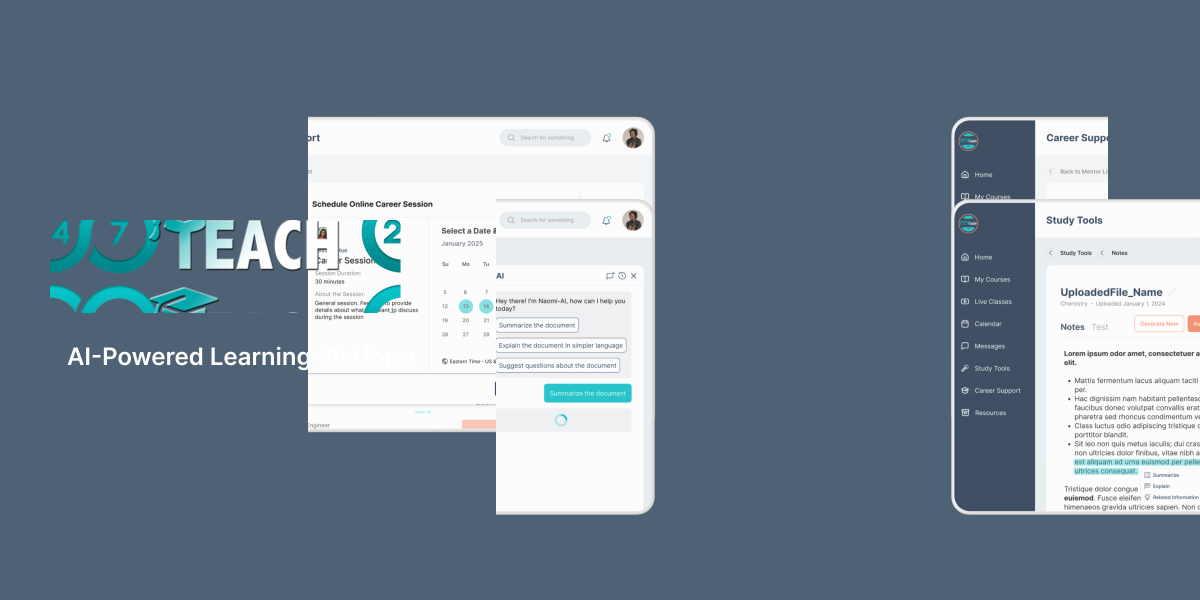
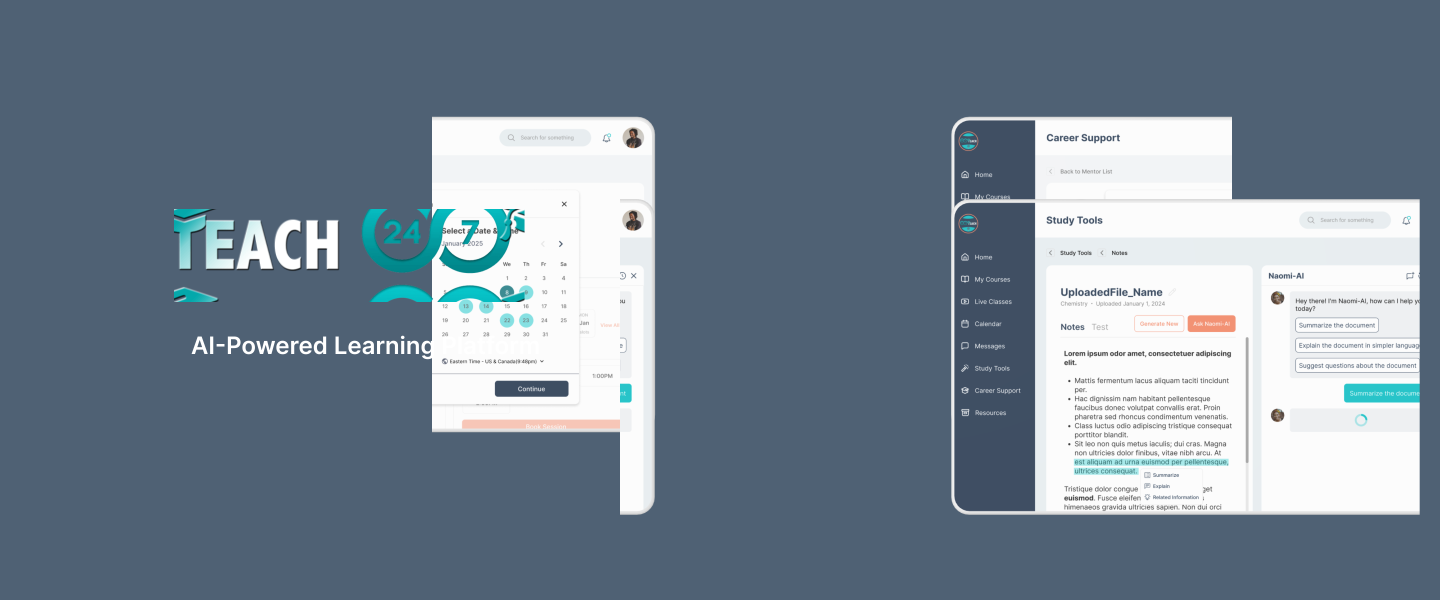
Get instant study support across subjects.
Highlight text in a document to ask AI a question.
View AI responses beside the document for easy reference.

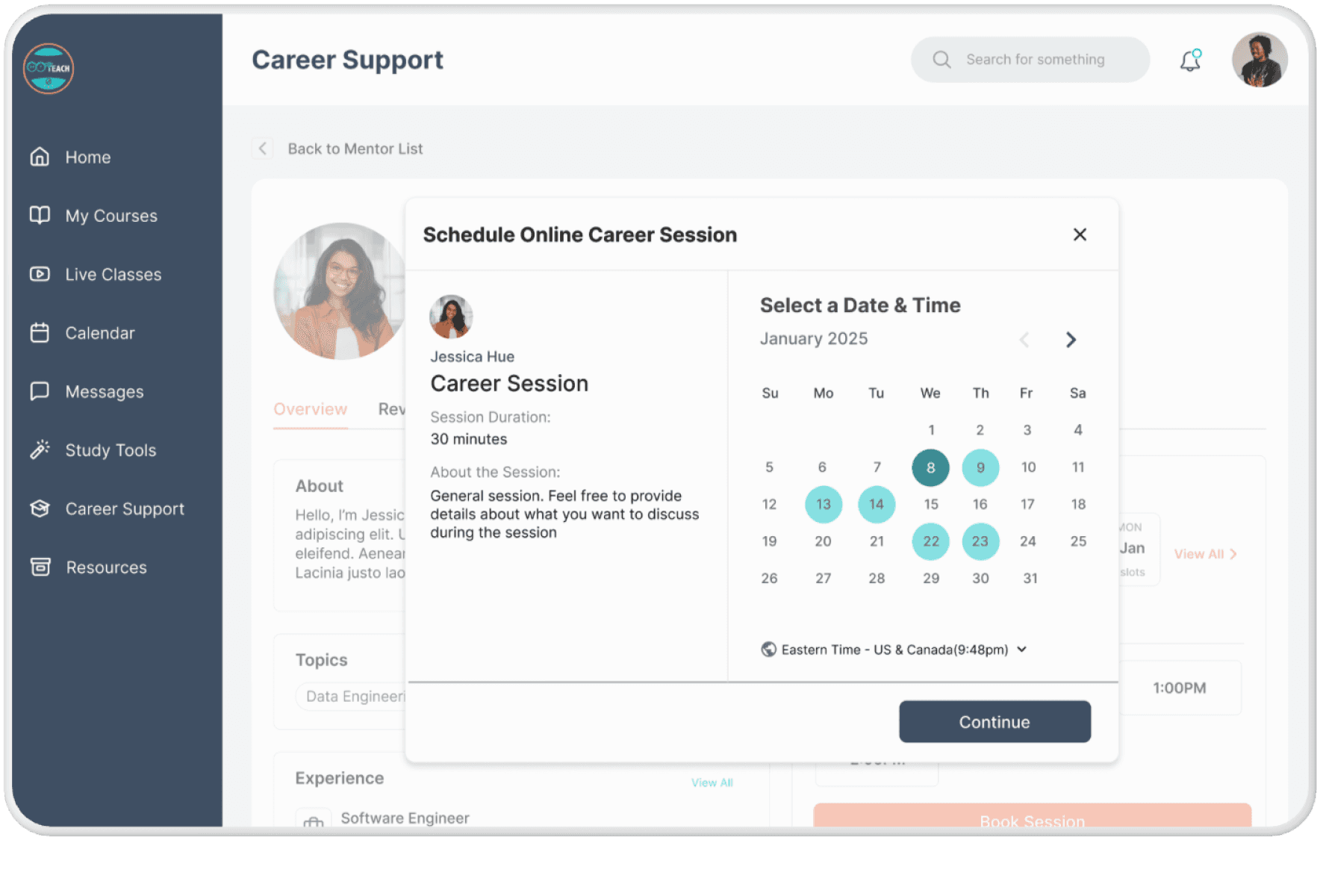
Schedule Meeting with mentor
Access career advice and mentorship beyond the local community.
View availability and book a time that works.
Explore mentor profiles to find the right match for your goals.
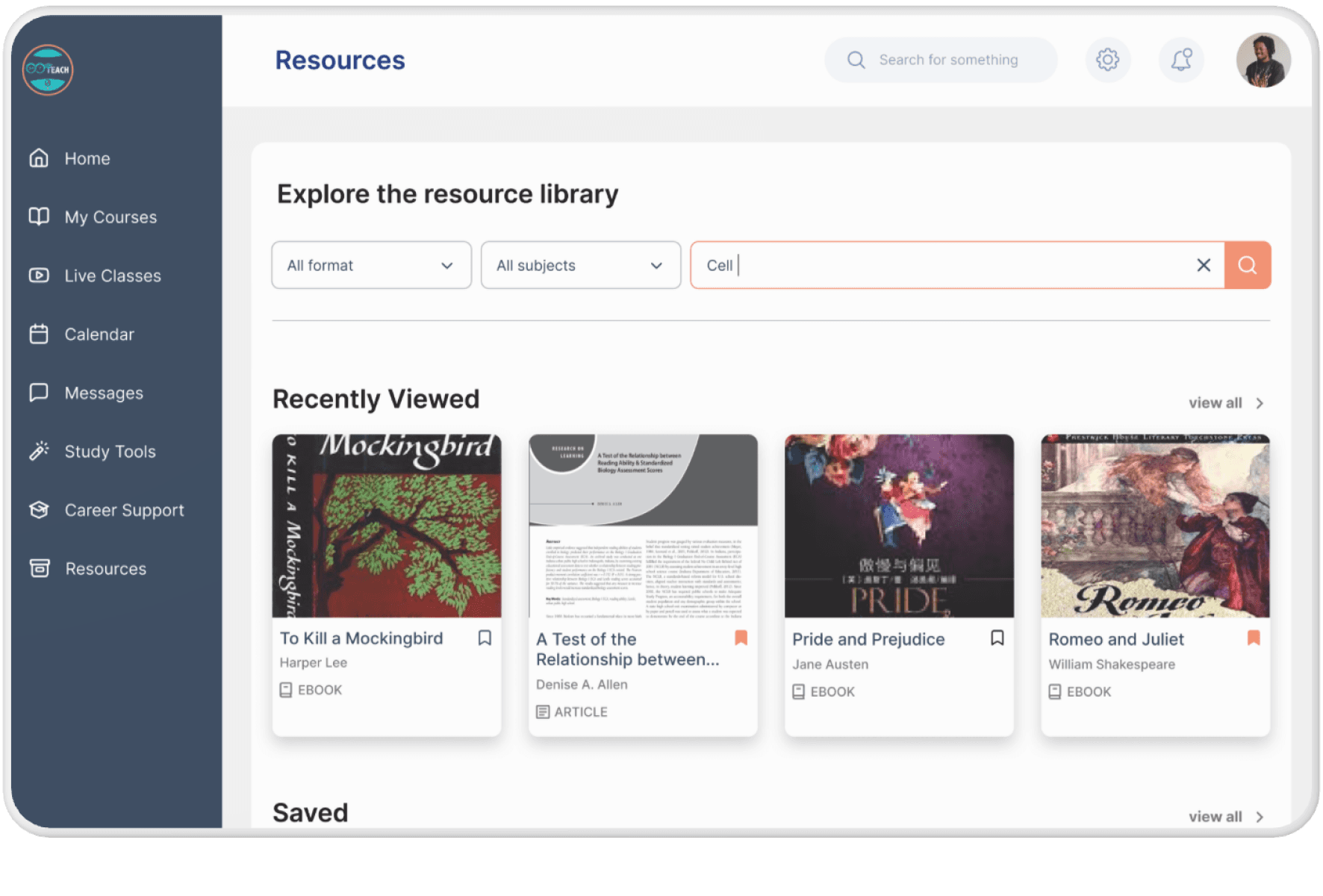
Resource library
Access a range of learning materials to help bridge the rural–urban education gap.
Filter and sort resources to find what you need.
Learn confidently with trusted sources.
Solution
AI Learning Platform with Comprehensive Support
To address this, we set out to create a secure, integrated AI learning platform that brings all essential learning support and content together in one place.
Research
We focused on developing the prototype by leveraging existing research as a foundation. Through an in-depth exploration of the educational challenges faced by under-resourced communities, we identified key pain points and opportunities where AI could add value.
Competitor Analysis:
We analyzed strengths and weaknesses of existing AI learning support platform, like Turbolearn AI, LightPDF, ChatPDF, and Knowt
EDUCATION CRISIS
3 in 5
teens aged 15–17 in Sub-Saharan Africa are out of school, the world’s highest rate.
EDUCATION CRISIS
1 in 5
children aged 6–11 are out of school. Others face overcrowded classrooms and teacher shortages.
AI IN EDUCATION
62%
students have higher test scores with AI-assisted learning.
AI IN EDUCATION
53%
use AI to find information; 51% use it to brainstorm ideas.
AI IN EDUCATION
35%
of high school teachers believe AI does more harm than good.
Turbolearn AI
AI Study Tool
STRENGTH
Clean, intuitive dashboard
Sidebar separates notes, summaries, quizzes, and flashcards
WEAKNESS
Free version heavily restricted (limited number of generations & chat messages)
LightPDF
PDF AI ASSISTANT
STRENGTH
Dual-screen layout: document + AI chat
Built-in accessibility options including zoom and search
WEAKNESS
Chat only (no quizzes or flashcards)
Chatbot not collapsible
Word count caps on responses
ChatPDF
PDF CHAT TOOL
STRENGTH
Suggested questions guide new users
Dual-screen layout: document + AI chat
WEAKNESS
Features are limited unless subscribed
Knowt
STUDY PLATFORM
STRENGTH
Approachable, student-friendly theme
Wide feature set: flashcards, quizzes, notes
WEAKNESS
Overwhelming navigation (too many buttons)
Poor feature discoverability
How might we
How might we improve access to quality education for students in rural areas through a safe and supportive digital learning experience?
Scoping
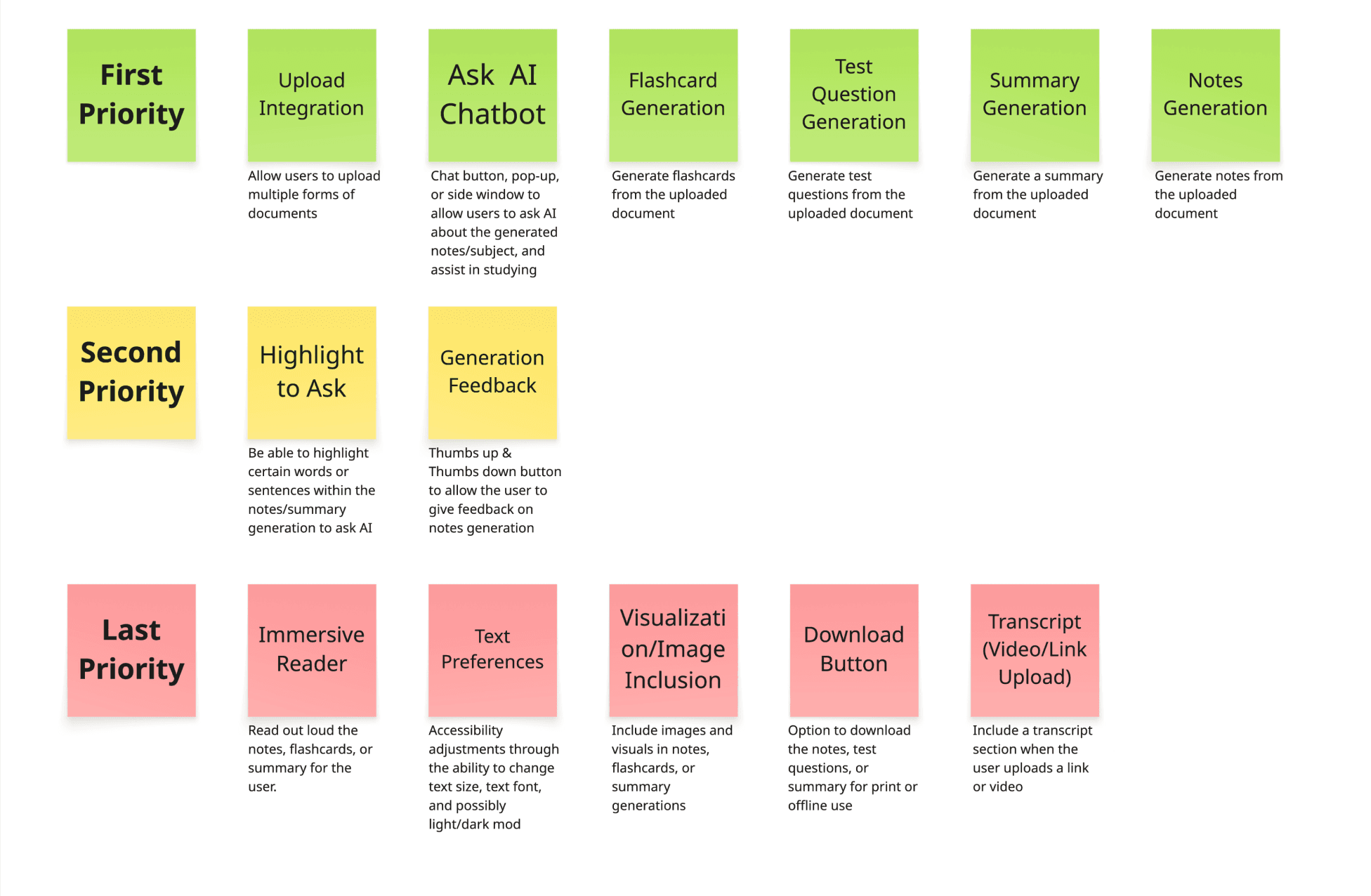
Working closely with the manager and team members, we mapped out the platform’s core features and defined their key components.
For the AI chatbot learning support, I helped brainstorm potential features and facilitated discussions to prioritize them based on impact and feasibility.
My role was to design the AI chatbot and its highlight to ask feature
Our research showed that while AI can enhance learning, it also raised concerns among parents and teachers. To build trust, I integrated human-centered support alongside AI tools, ensuring a safe and balanced experience.
I designed the mentor meeting scheduling and resource library features to support this goal.
Testing & Improvement
I conducted 2 rounds of user testing with a total of 8 high school students from South Africa via Zoom. The session used a live demo model, and participants were given specific tasks to complete. I observed their interactions and asked follow-up questions when necessary to gather deeper insights.
Based on the feedback, I continually iterated my design with 3 major improvements:
3 Main Improvements
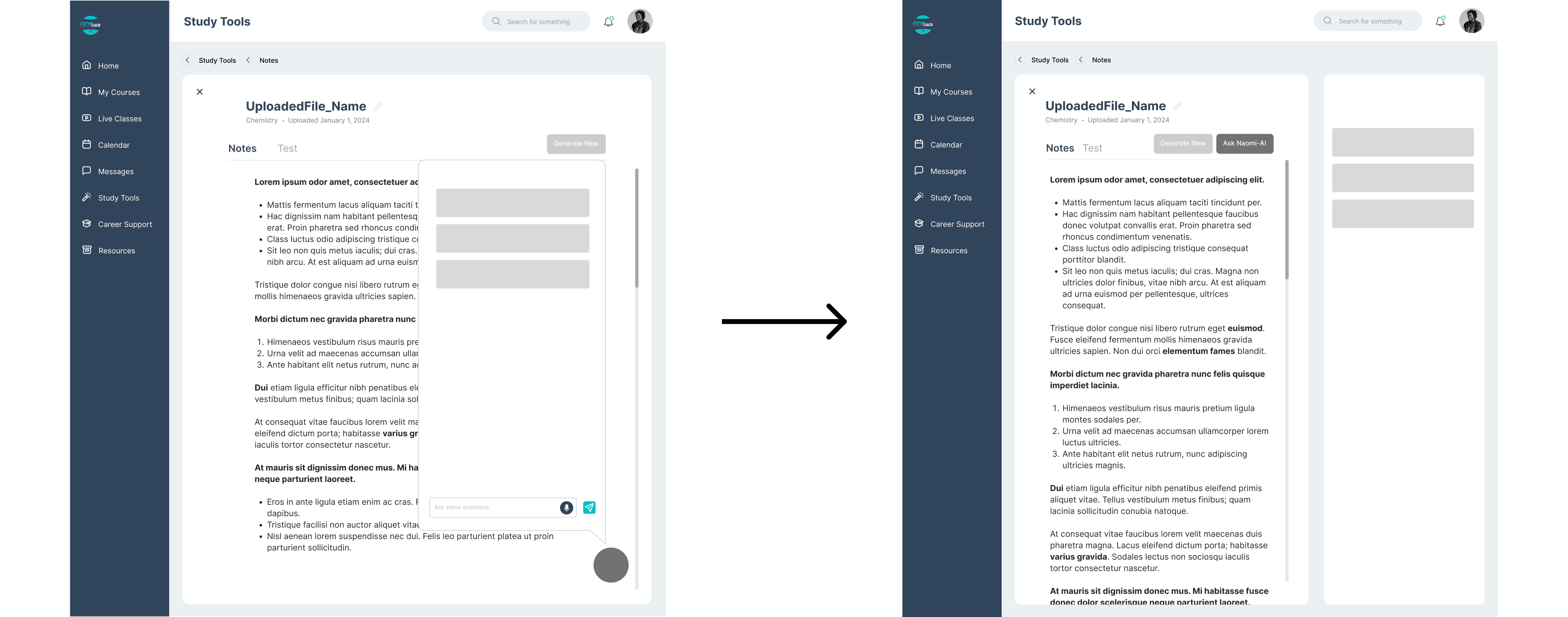
Side window for AI chatbot
Originally implemented the AI chatbot as a pop-up, following the existing pattern used on other pages.
User testing revealed that the pop-up blocked parts of the document and made it harder to reference content
Based on this feedback, I redesigned the chatbot as a side panel to improve visibility and support easier multitasking.
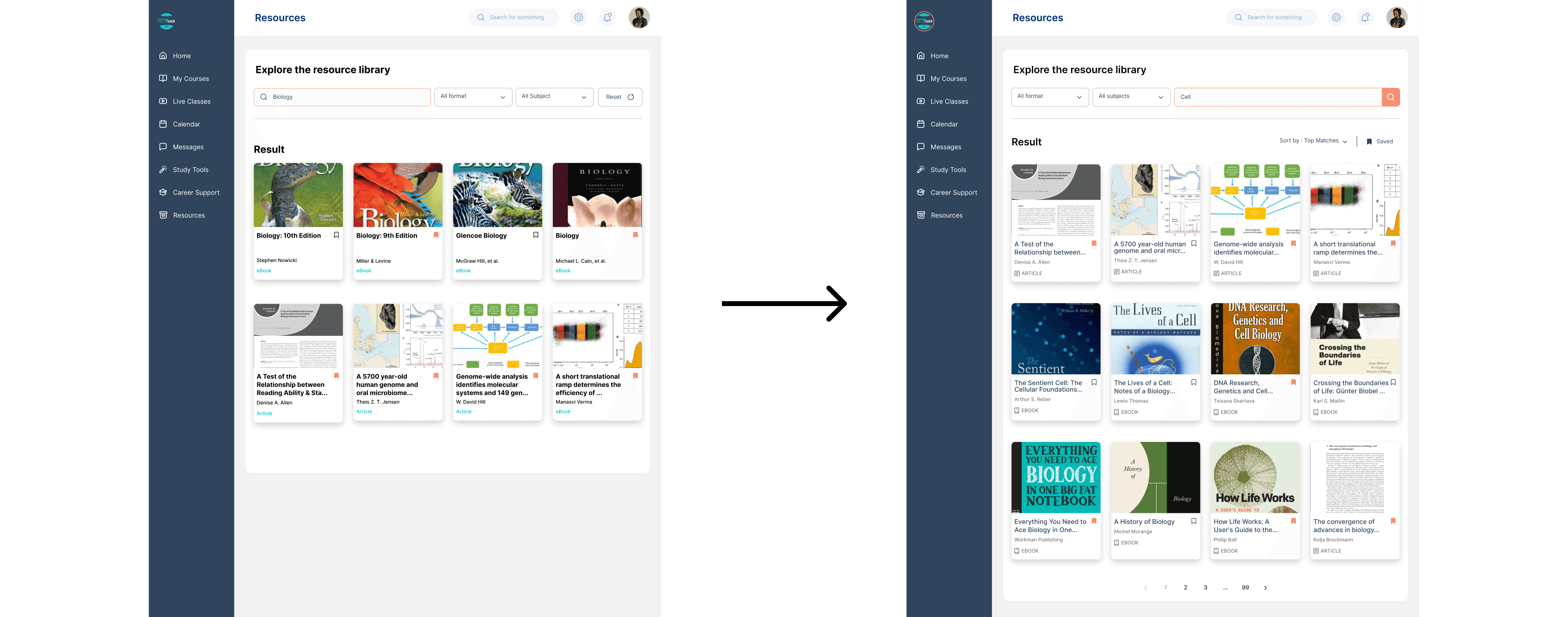
Redesign the search bar and label for resource library
Added a search button after feedback revealed that users expected a visible, more intuitive design
Removed the reset button and reordered the search bar and filters to improve usability
Updated resource labels from colored text—which users mistook as links—to grey text with icons, making them easier to understand at a glance
Showing schedule on mentor description page
Originally, users had to click a button that opened a pop-up to book a session.
Feedback revealed this extra step made it harder to view availability.
The design was updated to show upcoming available dates directly on the mentor detail page, simplifying access and reducing clicks.

1
Pop-up Chatbot
Side Panel
Users couldn't reference the document while chatting because the pop-up blocked the content they needed to see.
BEFORE
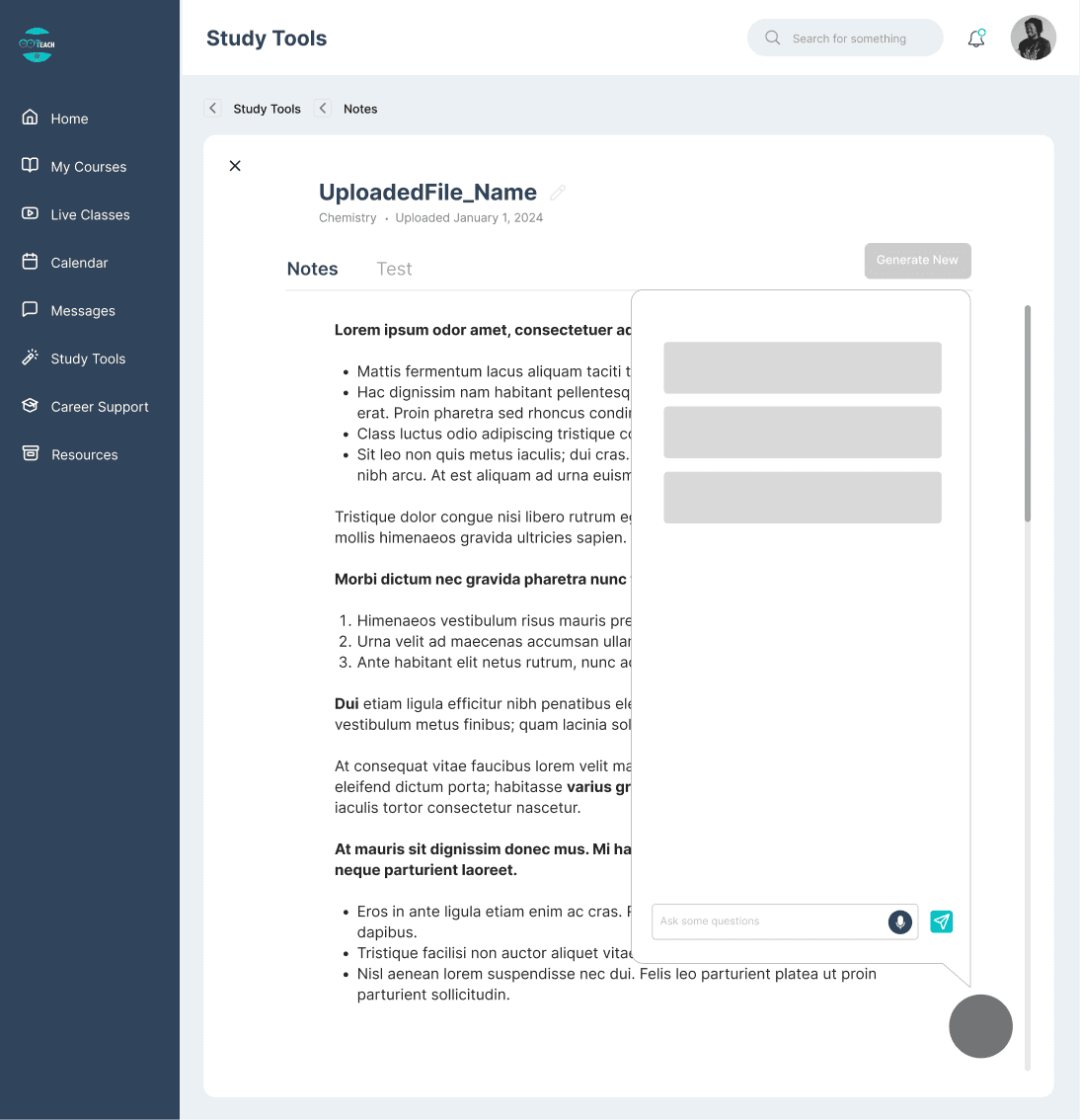
Pop-up covered the document, breaking the reading flow
AFTER
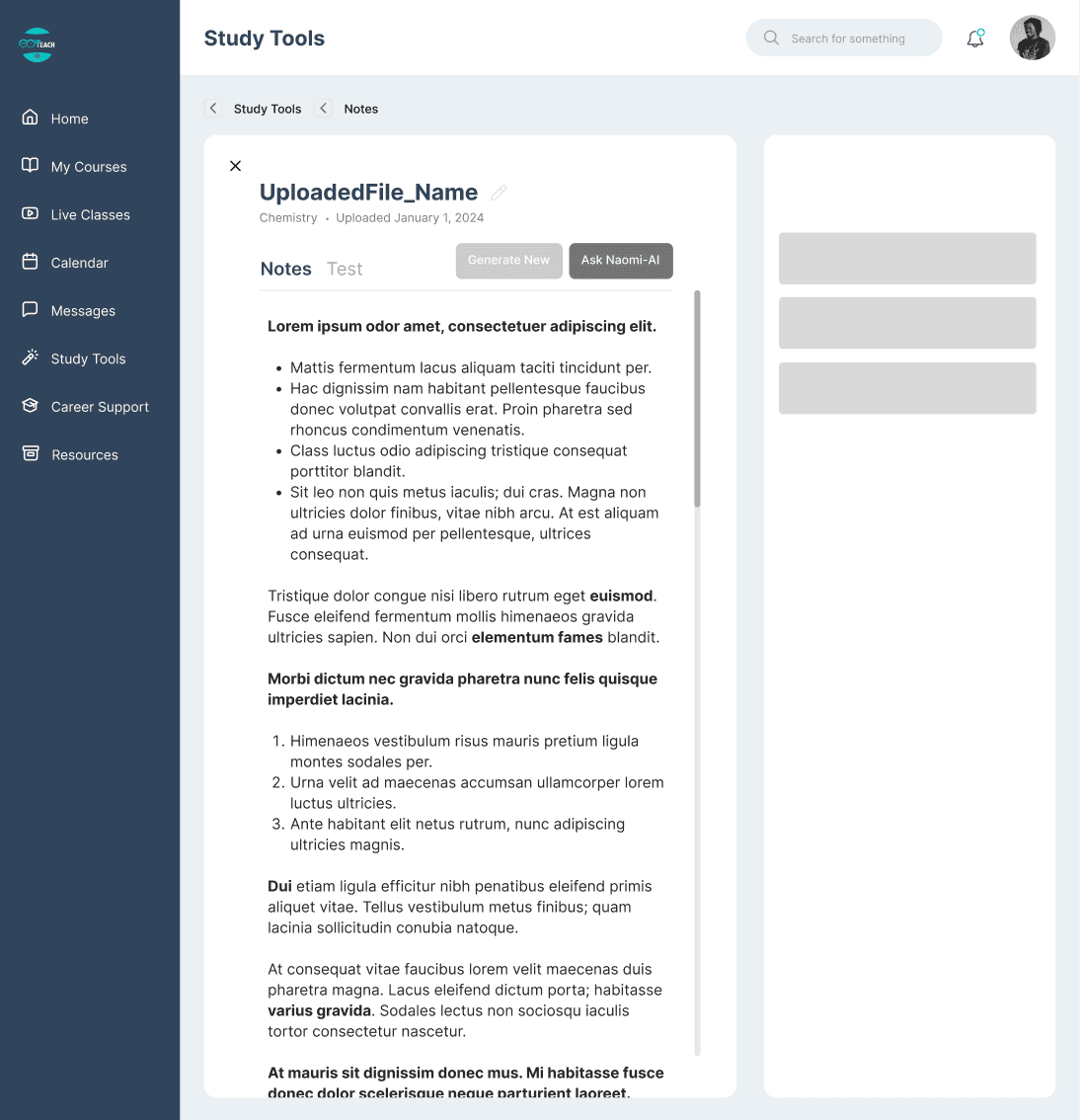
Side panel keeps document and AI chat visible simultaneously
Split-view enables seamless document reference while chatting with AI
2
Hidden Availability
Inline Schedule
Users wanted to check mentor availability before committing, but the extra click to open a pop-up added unnecessary friction.
BEFORE
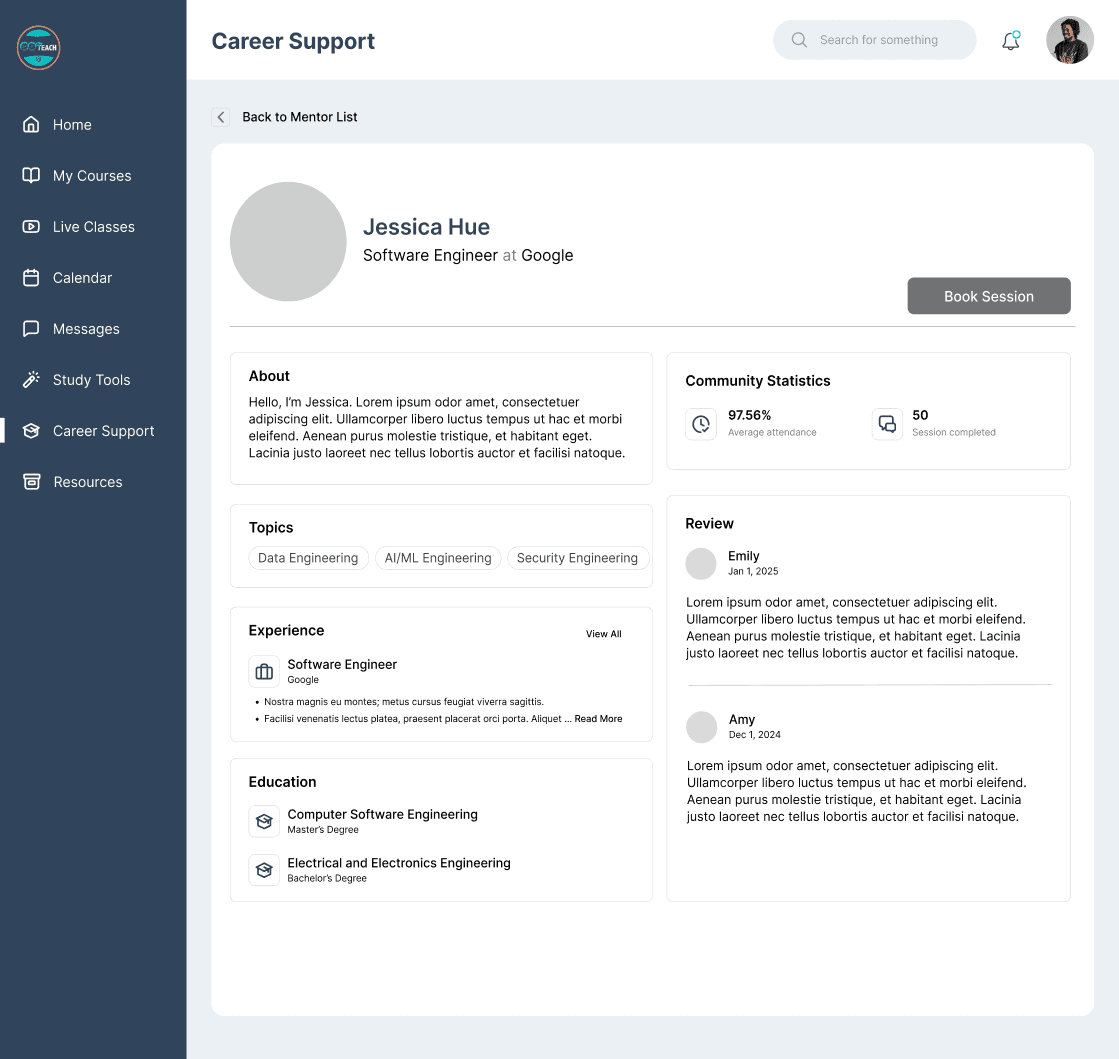
Availability hidden behind a button and pop-up
AFTER
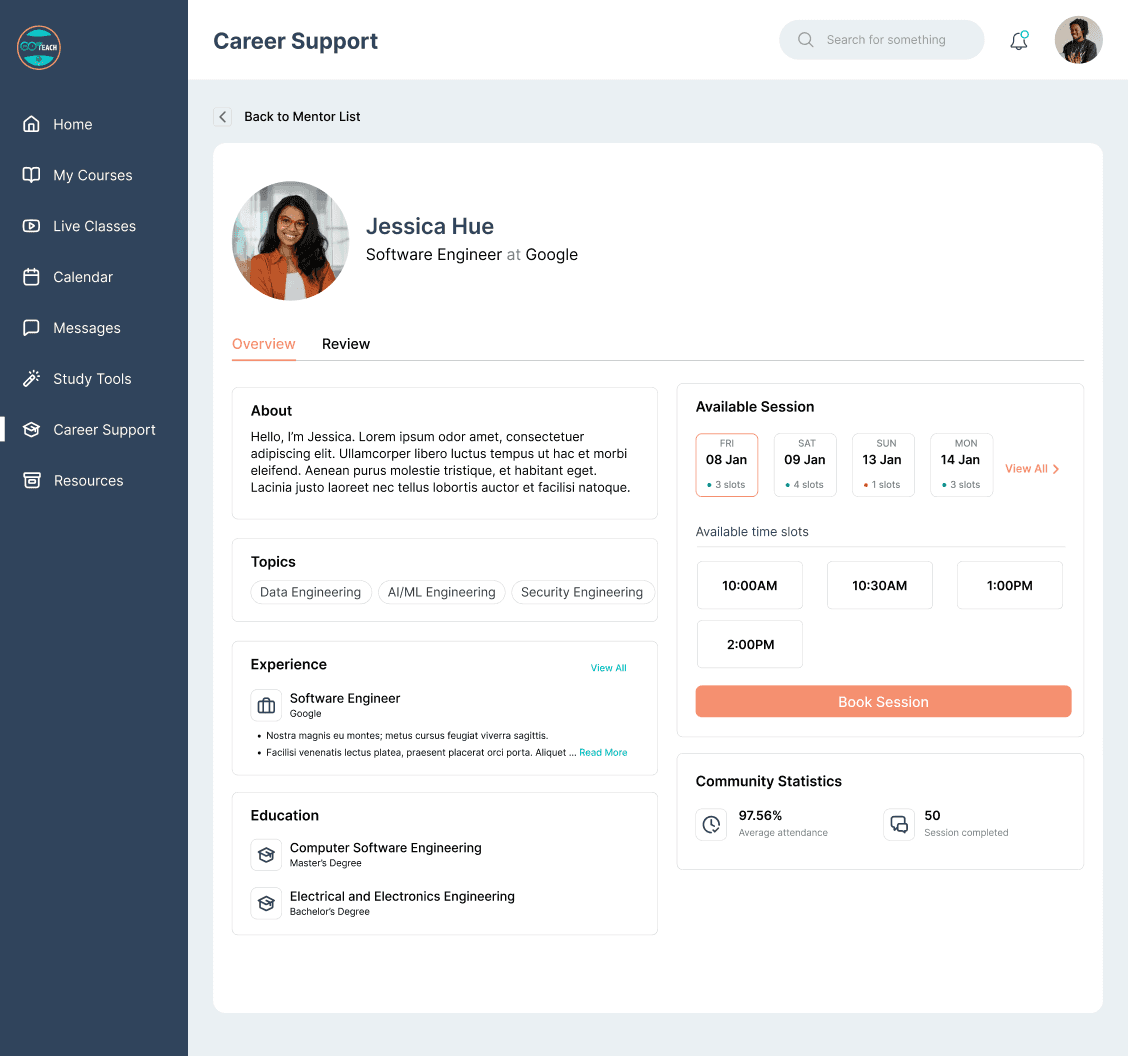
Available dates shown directly on the mentor profile
Reduced booking flow from 3 steps to 1, letting users view and book on the same page
3
Confusing Search
Labels to Clear Controls
Users expected a visible search button and mistook colored resource labels for clickable links, causing confusion and failed interactions.
BEFORE
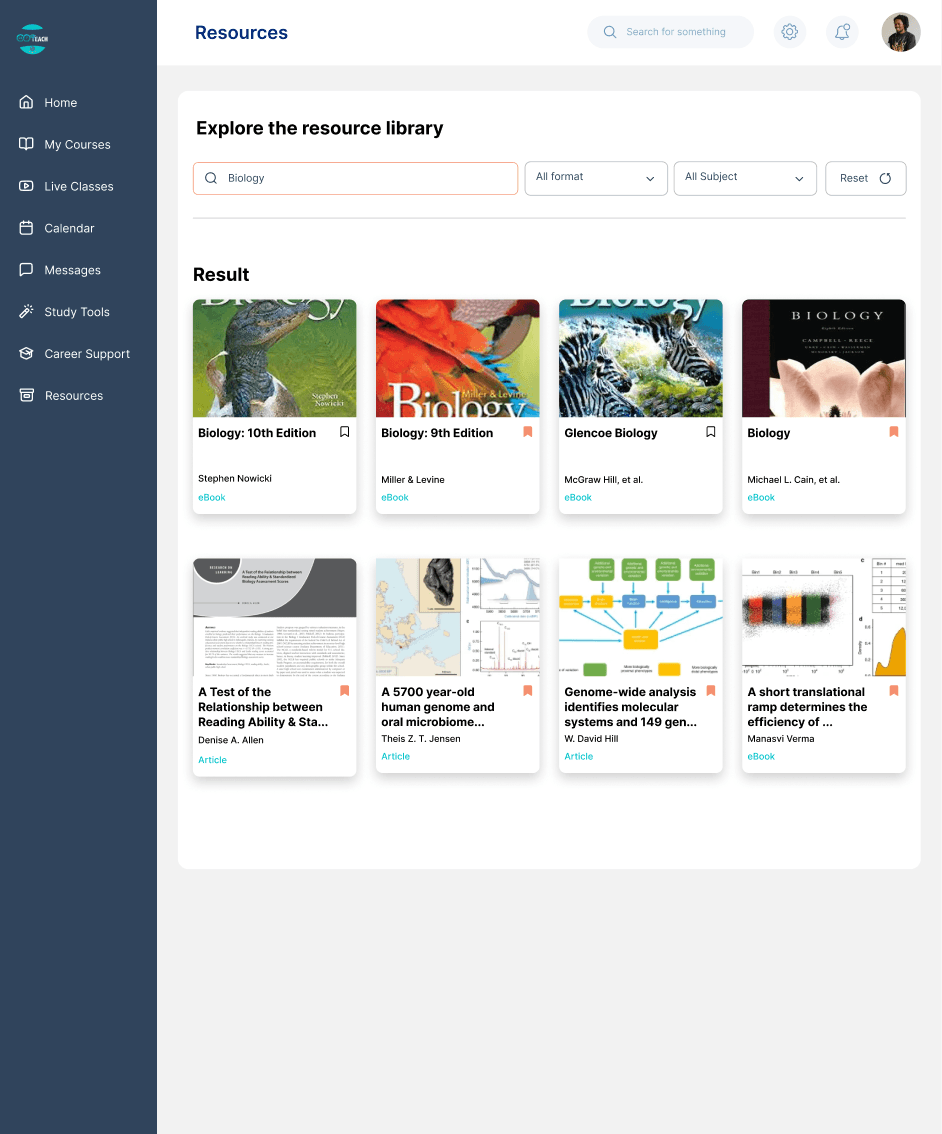
No visible search button; colored text labels were misleading
AFTER
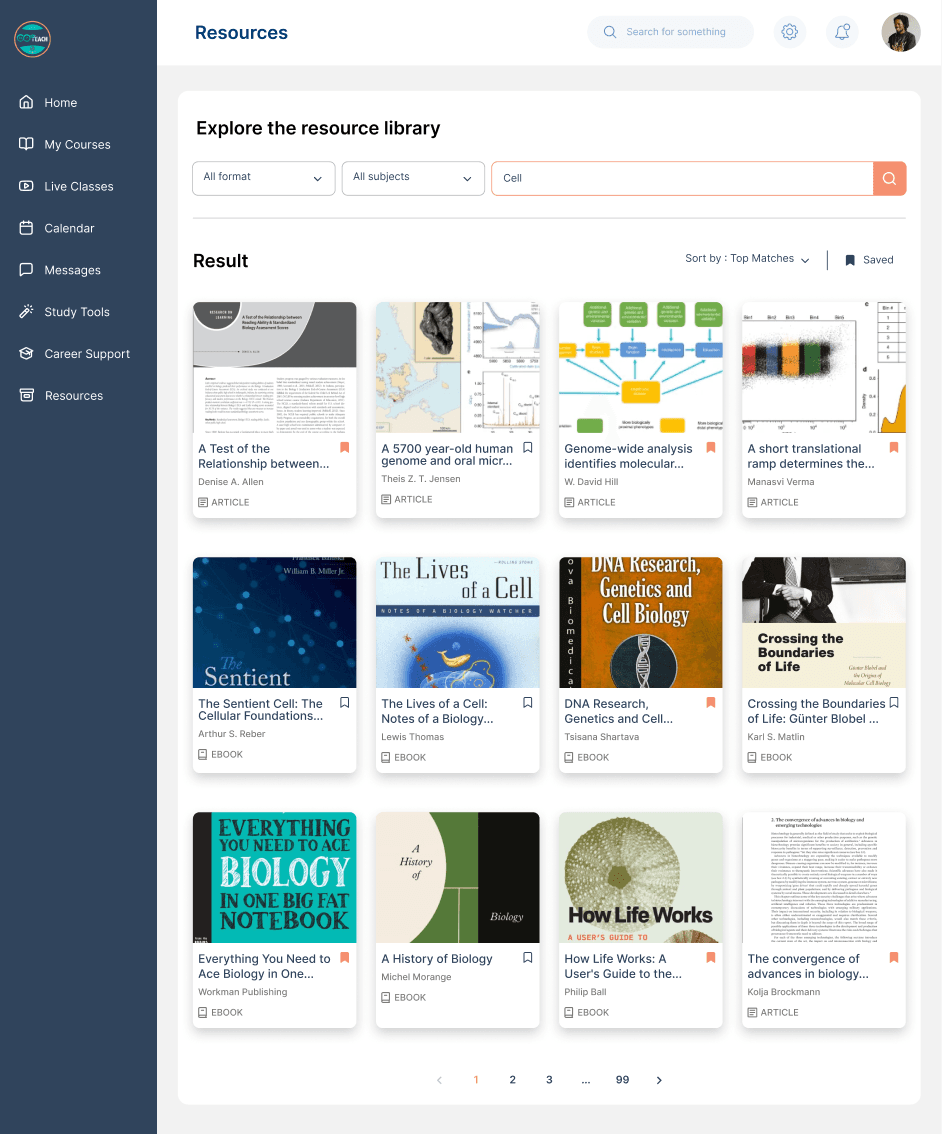
Explicit search button with grey text and icons for resource types
Eliminated false affordances so search is discoverable and labels are scannable at a glance
I conducted 2 rounds of user testing with a total of 8 high school students from South Africa via Zoom. The session used a live demo model, and participants were given specific tasks to complete. I observed their interactions and asked follow-up questions when necessary to gather deeper insights.
Based on the feedback, I continually iterated my design with 3 major improvements:
3 Main Improvements
Testing & Improvement
Final Product
1. AI chatbot learning support
Expendable View:
Keep your documents and chatbot conversation in one place. The split-view layout lets users explore AI insights alongside the source material for smoother reference and deeper understanding.

Quick Question Suggestions:
Smart prompts guide the conversation by suggesting relevant questions based on the document or prior interactions. Designed to help users who may not know where to start, this feature makes it easier to engage with the material and learn more effectively.

Highlight to Ask:
Simply highlight any text in the document to ask the AI about that specific section. This feature makes it easy to dive deeper into details without losing focus or breaking context.

24/7 Teach, an AI-powered learning platform that provide all the essential learning support
2. Schedule Meeting with mentor
Book a Meeting with Mentors:
Discover detailed mentor profiles and view real-time availability directly on the platform. Users can quickly select a preferred mentor, confirm the session, and complete the booking with confidence in just a few steps.

Extended Availability:
For users planning ahead, a calendar view reveals additional availability beyond the nearest time slots. This ensures flexible scheduling and makes it easy to find the right time that fits individual needs.

Meeting Schedule Overview:
A dedicated calendar tab provides a clear overview of all upcoming sessions. Users can easily track their bookings in one place and stay organized.

Flexible Rescheduling:
Sessions can be modified directly within the calendar, allowing users to adjust times seamlessly if plans change. This flexibility ensures ongoing support without the friction of canceling and rebooking.

3. Resource library
Advanced Search & Filtering:
Multiple filtering and sorting options make it easy for users to refine searches and quickly find the most relevant resources. This creates a smoother discovery experience tailored to individual needs.

Save for Later:
Resources can be bookmarked into a dedicated “Saved” tab for easy access anytime. Users can return to important materials without worrying about losing track of them.

Interactive Resource Viewer:
Clicking into a resource opens both an overview and the full document. Users can zoom, navigate between pages, and explore content seamlessly for a more engaging reading experience.

Thank you for reading!